
Professional Chinch Bug Treatment for Calgary Homeowners — Before the Damage Spreads
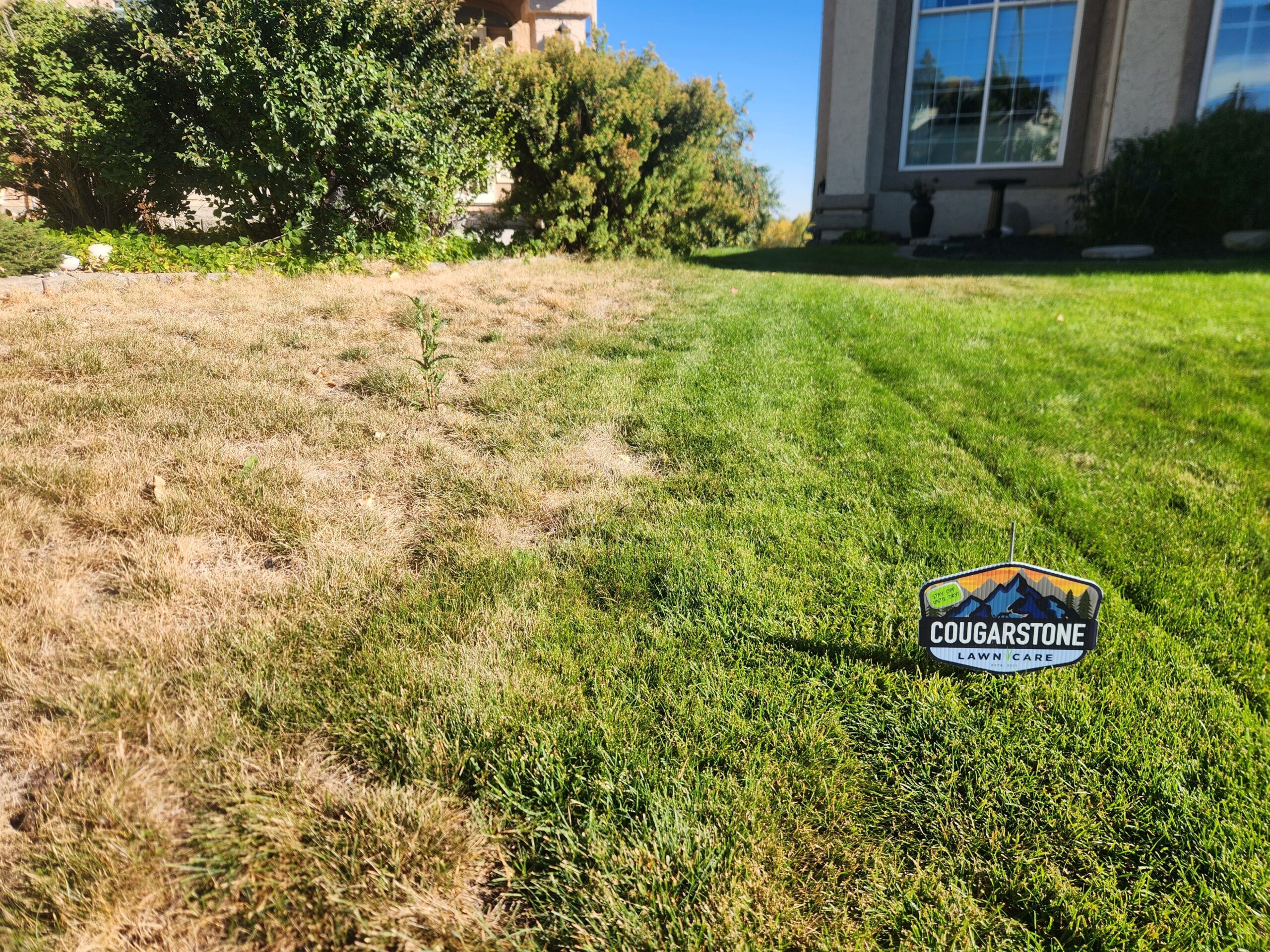
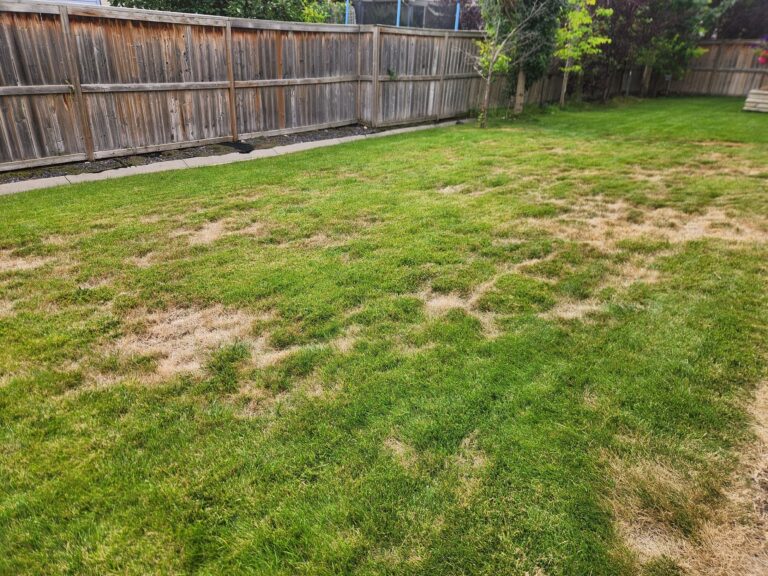
One of the most frustrating things about chinch bugs is that by the time you notice the damage, the infestation is already well established. What looks like drought stress in July or August — yellow patches, dry-looking areas that don't respond to watering — is often chinch bugs actively destroying your lawn from the inside out.
Cougarstone Lawn Care has been treating chinch bug infestations on Calgary lawns since 2011. We treat the infestation with a professional blanket spray application and help your lawn recover after the damage. Early treatment in June and July saves lawns. Waiting until August often means extensive re-seeding.
What Are Chinch Bugs and Why Are They a Problem on Calgary Lawns?
Chinch bugs are tiny lawn insects — less than 5mm fully grown — that feed by piercing individual grass blades and sucking out the plant’s sap. As they feed, they inject a toxin that blocks the grass’s ability to move water through its system. The grass blade dries from the inside out and dies, even if you are watering regularly. That is why chinch bug damage is so often confused with drought stress.
Calgary’s hot, dry summers create ideal conditions for chinch bugs. They thrive in heat and low humidity, and drought-stressed lawns are significantly more vulnerable. Activity typically begins in June and intensifies through July and August. In Calgary, the hairy chinch bug is the primary species — it targets Kentucky bluegrass and red fescue, the dominant grass types in Calgary residential lawns.
Chinch bugs do not go away on their own and they do not die over winter — they overwinter in thatch and leaf litter and return as soon as temperatures rise in spring. An untreated infestation grows year over year. In southern Calgary, infestations have worsened steadily since the mid-2010s as the species has expanded its range.
"Chinch" rhymes with "inch" — CHINCH bugs. Named from the Spanish "chinche" meaning bug or pest.
They pierce individual grass blades and extract sap, simultaneously injecting a toxin that prevents the grass from moving water. They prefer Kentucky bluegrass and red fescue — the most common grass types in Calgary lawns.
Look for irregular yellow-brown patches in hot, sunny areas during July and August that don't recover with watering. Confirm with the tin can test — push a bottomless can into the edge of the damage, fill with water, wait 10 minutes. Chinch bugs float to the surface.
Not to people or pets — only to grass. They do not bite, sting, or spread disease. Their only damage is to turf.
Calgary's hot summers, drought-stressed turf, and the prevalence of Kentucky bluegrass all create ideal conditions. Lawns with heavy thatch, poor soil health, or significant heat exposure are most vulnerable.
Chinch bug activity is high across SE Calgary — Mahogany, Auburn Bay, Cranston, Silverado — and SW and NW communities including Signal Hill, Tuscany, and Rocky Ridge. Newer developments with large turf areas and south-facing lots are most commonly affected.
Unsure if you have chinch bugs?
Call now for a free, no-obligation assessment — we'll come out and tell you exactly what you're dealing with.

How to Tell If You Have Chinch Bugs vs Drought Damage
This is the most common source of confusion for Calgary homeowners. Both look similar at first glance — yellowish-brown patches of grass. Here is how to tell them apart:
| Drought damage | Chinch bug damage | |
|---|---|---|
| Pattern | Large, uniform areas | Irregular patches, often spreading outward from one spot |
| Response to watering | Recovers with irrigation | Does not recover despite regular watering |
| Location | Whole lawn or large sections | Often starts in sunny, exposed areas — south-facing slopes, near pavement |
| Grass at edge | Uniform colour change | Green grass immediately beside dead grass at the advancing edge |
| Time of year | Any hot period | Typically July–August peak |
| Visible bugs | No | Yes — part back your grass at the edge of damage and look for tiny moving insects |
Cut both ends off a tin can and push it 5cm into the turf at the border of damaged and healthy grass. Fill with water and wait 10 minutes. If you have chinch bugs, they will float to the surface. This is the most reliable DIY confirmation method and is exactly what our technicians do during the assessment visit.
Cougarstone's Chinch Bug Treatment Program
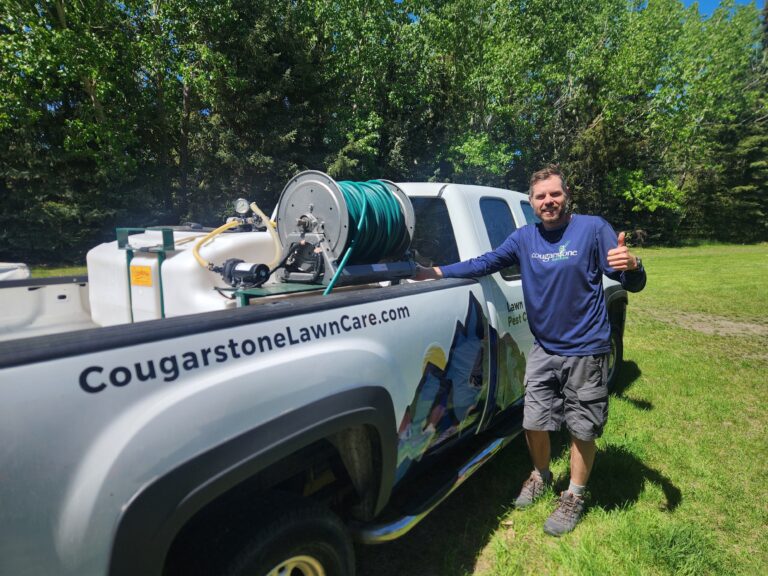
Our chinch bug treatment is a professional liquid blanket spray application that covers the entire lawn, with additional attention given to active infestation areas. We use commercial-grade insecticides not available to homeowners — significantly more effective than hardware store products, applied by trained, licensed technicians.
Our chinch bug treatment is a professional liquid blanket spray application that covers the entire lawn, with additional attention given to active infestation areas. We use commercial-grade insecticides not available to homeowners — significantly more effective than hardware store products, applied by trained, licensed technicians.
A Cougarstone technician visits your property to confirm the infestation. We walk the lawn, identify active zones, assess severity, and confirm it is chinch bugs — not drought stress or sod webworm. If you don't have chinch bugs, we won't treat your lawn or charge you.
The initial treatment is a full blanket liquid spray across the entire lawn. We do not spot-treat only the visible damage — by the time you see dead patches, chinch bugs have already spread into the surrounding green grass.
A second treatment timed to the chinch bug life cycle. This application targets juvenile bugs that hatched after the first treatment, ensuring the population is fully eliminated rather than just suppressed.
For severe infestations or large properties, a third visit may be recommended. We'll advise you after the initial assessment.
Chinch bugs have overlapping generations — eggs, juveniles, and adults are all present in the lawn simultaneously during peak season. The first treatment eliminates adults and older juveniles. The second catches the next generation before it matures and begins feeding. Single-treatment programs often appear to work initially but see reinfestation within weeks.
How we treat chinch bugs in Calgary
We treat the lawn with a truck-mounted sprayer that reaches every area of your property with a full blanket application. After treatment, keep children and pets off the lawn until it is dry — typically a few hours. Once dry, normal use can resume. We leave a service card at your door after every visit detailing exactly what was applied.
Restoring your Calgary lawn after chinch bug damage
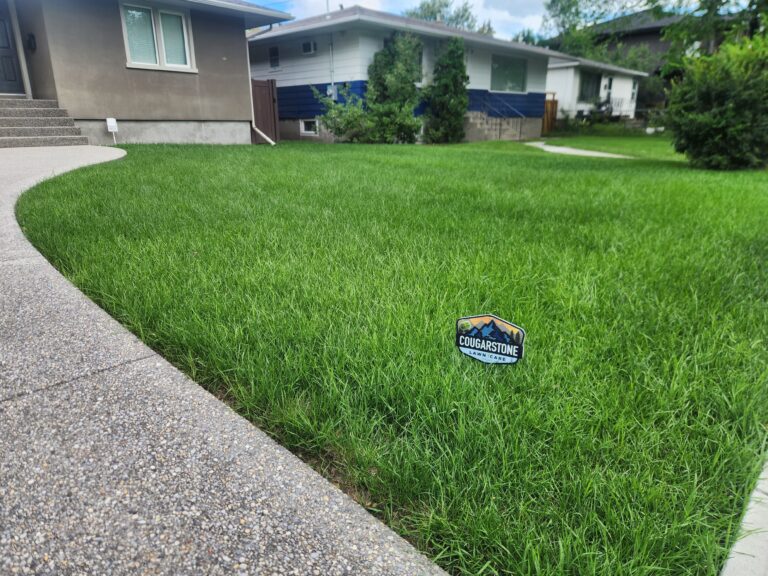
The grass blades killed by the chinch bug toxin will not recover — they are permanently damaged. However, the soil and roots beneath are largely intact, and with the right care your lawn can fill in completely within one growing season.
Why Calgary homeowners choose Cougarstone
There are national franchises and general lawn care companies offering chinch bug treatments in Calgary. Here is why local homeowners choose Cougarstone:
Chinch bug treatment service areas in Calgary
Chinch bug activity is consistently high across Calgary's SE, SW, West, and NW communities — areas with newer developments, large turf areas, and the bluegrass/fescue grass types that chinch bugs prefer.
- Mahogany
- Auburn Bay
- Cranston
- Silverado
- Legacy
- Walden
- Chaparral
- Copperfield
- McKenzie Lake
- Heritage Pointe
- Glamorgan
- Lakeview
- Christie Park
- Evergreen
- Shawnessy
- Bridlewood
- Discovery
- Woodbine
- Oakridge
- Coach Hill
- Cougar Ridge
- Patterson
- Strathcona Park
- West Springs
- Rosscarrock
- Wentworth
- Signal Hill
- Aspen Woods
- Tuscany
- Rocky Ridge
- Nolan Hill
- Edgemont
- Hawkwood
- Scenic Acres
- Evanston
- Kincora
Cougarstone Lawn Care — Chinch Bug Control Calgary
- 230 Cougarstone Circle SW, Calgary, AB T3H 4W4
- (403) 324-5296
- office@cougarstonelawncare.com
- Monday - Friday / 9 AM to 5 PM
Cougarstone has been treating chinch bug infestations on Calgary lawns since 2011. We treat the infestation with a professional blanket spray application and help your lawn recover after the damage. Early treatment in June and July saves lawns. Waiting until August often means extensive re-seeding.
Chinch bug control Calgary — frequently asked questions
Questions we hear every season — the same ones currently being answered by Reddit threads.
If you are seeing yellow or brown patches on your Calgary lawn that are not responding to watering, contact Cougarstone today. Early treatment in June or July stops the damage before it spreads. Waiting until August means more of your lawn is lost.
We serve SE Calgary, SW Calgary, West Calgary, NW Calgary.
Our Services & Risk Free Guarantee!
Discover the Cougerstone Lawn Care is your Calgary lawn care company! Our Lawn Care and Pest Patrol Services are second to none and will have you enjoying your yard again in no time.
Lawn Care Services
Pest Control Services

Start enjoying a pest free yard this summer
Author: Michael Denis